ContainerTurn
How much does a dedicated drayage lane cost?
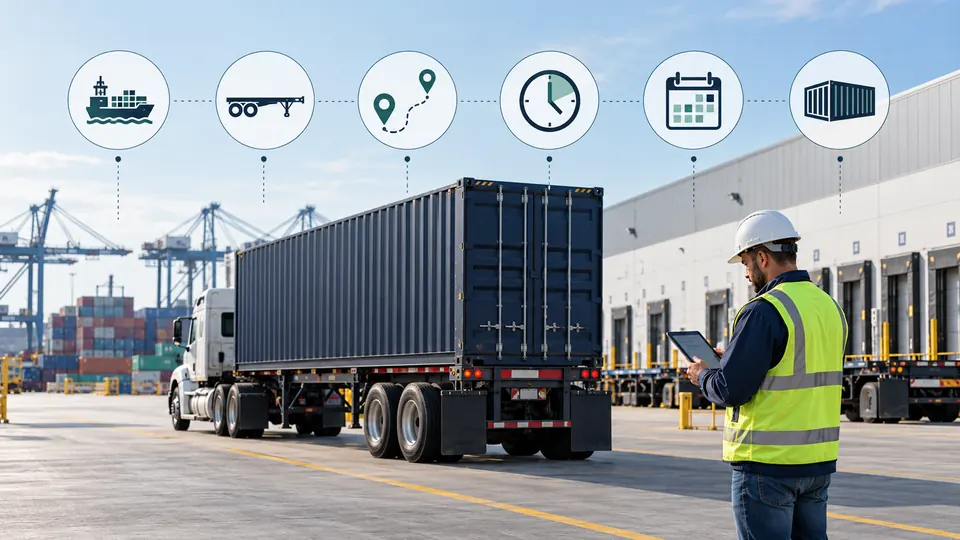
Dedicated drayage pricing depends on the complete operating cycle: gateway, distance, cadence, equipment, dwell, chassis, special cargo, empty disposition and committed volume.
How does ContainerTurn address this?
There is no responsible nationwide flat price for a dedicated drayage lane. A carrier prices the repeatable cycle using port or rail access, round-trip distance and time, expected daily or weekly volume, live-load or drop requirements, chassis responsibility, free time, tolls, fuel, special equipment, overweight or hazardous controls, detention exposure and the empty-return or street-turn plan. Reliable cadence can improve utilization, but only when the commitment and operating assumptions are credible. Dedicated pricing rewards predictability only when predictability is real. The carrier still must recover tractor, driver, chassis, fuel and overhead costs, plus the time and risk created by gates, appointments, dwell and special requirements. Map the complete cycle Include pre-pull, port or rail transaction, inland movement, loading or unloading and empty or loaded return. Price the time Estimate gate, road, facility, layover and recovery time. Assign equipment costs Define chassis, genset, storage, specialized equipment and extra days. Set accessorial rules Agree waiting, redelivery, cancellation, overweight, hazmat and other triggers. Tie rate to commitment State volume, duration, fuel method and conditions that reopen pricing. How much is drayage? Drayage is route- and operation-specific; a usable quote requires gateway, distance, equipment, time, service and return details. How does drayage work? A qualified motor carrier moves an intermodal container between a port or rail ramp and an inland facility under equipment, terminal, chassis and appointment rules. Why is drayage important? It connects ocean and rail networks to inland shippers, warehouses and distribution centers, and often controls whether the wider supply chain stays on schedule. Base linehaul or drayage rate and fuel-surcharge method. Included chassis days, free time, pre-pull, storage and waiting. Drop, layover, redelivery, overweight, reefer, hazmat and bonded charges. Volume commitment, tender rules and unused-capacity treatment. Rate validity, escalation terms and material operating assumptions. Two lanes with the same mileage can price differently when one has predictable drop-and-pick appointments and pool chassis while the other requires live unloading, pre-pulls, private chassis and frequent overweight permits. Comparing rates without normalizing included services. Assuming higher monthly volume always lowers cost. Leaving detention and unused-capacity rules undefined. Ignoring the empty or loaded return leg. A target rate is not a carrier commitment. Final pricing must be confirmed by the executing provider after the complete lane and accessorial scope are reviewed.
Questions this page answers
How much is drayage?
Drayage is route- and operation-specific; a usable quote requires gateway, distance, equipment, time, service and return details.
How does drayage work?
A qualified motor carrier moves an intermodal container between a port or rail ramp and an inland facility under equipment, terminal, chassis and appointment rules.
Why is drayage important?
It connects ocean and rail networks to inland shippers, warehouses and distribution centers, and often controls whether the wider supply chain stays on schedule.
Written by ContainerTurn Editorial Team · Reviewed by ContainerTurn Operations Review · Last reviewed 2026-11-18
Container logistics knowledge center · Dedicated drayage lane sourcing · Submit a private lane