ContainerTurn
Construction spending split by sector. Tie container purchases to approved project phases.
Written by ContainerTurn Editorial Team · Reviewed by ContainerTurn Operations Review · Published · Updated
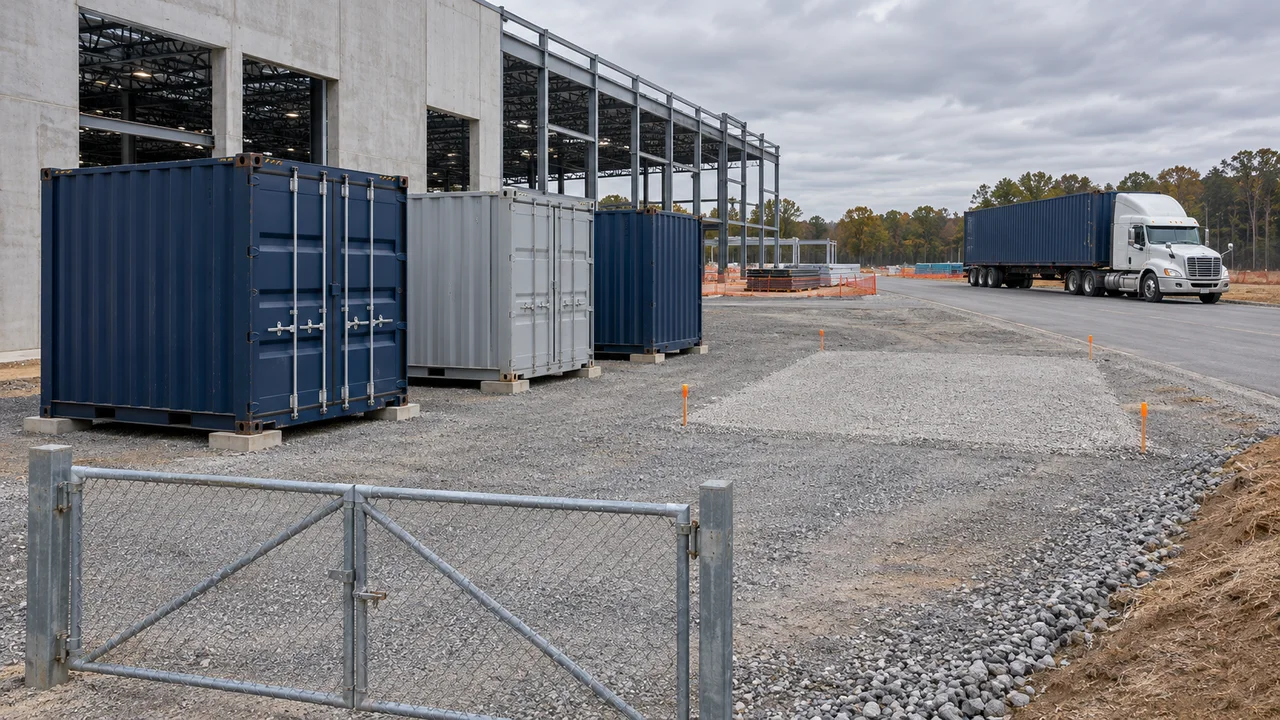
September Census data points to uneven construction activity. For a bulk container order, compare full allocation with staged release using the project's own delivery and holding costs.
The finding
September construction spending fell 1.9% overall while nonresidential spending rose 0.6%, according to the Census Bureau. For commercial container procurement, that split supports a project-specific buying decision. Compare the discount for a full batch against the holding, delivery and rescheduling exposure of units needed in later phases.
What this changes operationally
Who should pay attention
Commercial project owners, contractors and procurement teams buying five or more containers for a phased site.
What to check next
Ask for two comparable written quotes covering the same equipment condition and placement scope. Price full allocation now and staged release against approved project milestones, then identify who pays if a phase slips.
What this cannot prove
Spending data cannot measure container demand, local stock, future prices or a project's readiness. It is a dollar measure of work put in place, seasonally adjusted and unadjusted for price changes. September estimates are preliminary.
How we got here
The headline and nonresidential series moved in different directions. Neither supplies the dates when a particular site can accept containers. Our inference is to base quantity commitments on authorized phases and test the financial cost of committing early.
Key measures
- Total construction: −1.9% · September versus revised August, seasonally adjusted annual rate.
- Nonresidential: +0.6% · Same month and adjustment basis. A point estimate subject to sampling uncertainty.
- Illustrative discount: $1,200 · Assumption only. 12 containers × $100 discount for full allocation.
- Break-even holding: $150/unit · $1,200 ÷ 8 later-phase units, before other costs. Scenario only.
A national spending headline cannot set a site delivery date
The U.S. Census Bureau released its September figures on November 2, 2026. These measure construction work performed during the reporting month. A purchase decision also needs the buyer's approved scope, site access, unloading method, usable pads and required-in-service dates.
Our interpretation is a procurement control. Group the intended containers by the phase that will actually use them. Obtain supplier terms for equipment allocation, storage, release deadlines, cancellation and condition acceptance. A reservation creates value only when the contract identifies what is being held and on what terms.
Calculate what an early commitment must save
Consider a hypothetical 12-container project. Four units can be placed now and eight are needed in six weeks. Assume the full-batch quote saves $100 on each of the 12 units, with identical equipment condition, transport and placement scope under both options. That produces a $1,200 discount.
Dividing $1,200 by eight later-phase units gives $150 per deferred unit. If six weeks of holding and any extra handling together exceed that amount, the modeled discount is consumed before financing or rescheduling costs. If the second quote charges extra delivery mobilization, add that charge to the staged option before comparing. These assumptions illustrate a decision method and make no claim about market rates.
Compare full-batch discount with incremental holding, extra handling, financing and delay exposure, less any staged-delivery premium avoided. Confirm which costs apply in writing. A time-limited allocation may be attractive when stock is confirmed, condition accepted and the later phase funded. A project with unresolved placement access needs a different commitment.
Release each batch against a documented milestone
Assign one person to authorize the release and another named contact to confirm site acceptance. Review the plan whenever the construction programme changes.
- Confirm quantity, size, condition, intended use and approved funding for each phase.
- Validate pads, access, unloading equipment, delivery sequence and placement clearances.
- Compare both written options on the same scope, including allocation expiry, holding, handling, transport and delay terms.
- Set a release deadline tied to site confirmation and supplier lead time. Record the agreed response when a phase slips.
Original sources
- U.S. Census Bureau, September 2026 Construction Spending, Table 1 and explanatory notes · Released November 2, 2026. September preliminary and August revised estimates. Rolling release URL may be replaced by later releases.
Container logistics knowledge center · Dedicated drayage lane sourcing · Submit a private lane